Showing posts with label Ghost. Show all posts

Thursday, April 7, 2022

Ghost - IMPERA [Review]

IMPERA is Swedish metal band Ghost's long-awaited and highly anticipated fifth studio album, with it having been four years since the band's fourth album Prequelle (although they did drop small releases here and there such as the two tracks on the Seven Inches of Satanic Panic single and their incredible cover of Metallica's "Enter Sandman"). Admittedly, IMPERA was a bit of a grower for me because I felt lukewarm upon first listen (even though I instantly loved the first two singles "Hunter's Moon" and "Call Me Little Sunshine" when they first dropped). I remember seeing several friends who are Ghost fans saying on release day that the album was beautiful and might have even been their favorite Ghost album yet, and I initially found myself thinking that I didn't quite feel the same way but wished that I did. While I still don't know that I would call IMPERA my favorite Ghost album thus far (an honor that I think still goes to Prequelle), I am definitely absolutely in love with it now and definitely think that beautiful is, overall, a great word to describe it. As is Ghost tradition (with Meliora being the one exception as it opens with "Spirit"), the album opens with a short instrumental intro titled "Imperium"(a word meaning absolute power, which makes sense given the album title being a variation of that and frontman Tobias Forge having revealed ahead of the album's release that the album would be about the fall of empires). "Imperium" is absolutely gorgeous, a slow acoustic piece that builds in intensity and weight as it progresses, eventually bringing in electric guitar and a marching beat. Forge has described it as having a "national anthem opening" quality to it, and I can definitely hear that, especially because of its aforementioned marching beat which also gives it a bit of a militaristic quality. The melody heard via the electric guitar is also repeated again at the very end of the album (which I will call back to when I get there). IMPERA then gives us "Kaisarion" which is my least favorite song on the album. While I by no means hate it, it has somewhat of a punk rock quality to it, and I don't know how well it works here. It also feels a tad too long. Running at just over five minutes in length, it is a bit redundant, and by the time it reaches four minutes or so, it feels like it has already done pretty much everything that it needs to.

Interestingly, whereas "Kaisarion" definitely sets the stage for the album's previously mentioned theme involving the fall of empires (as it addresses, as Ghost often does, Christian hypocrisy and dominion and even directly states in the first verse that "we're building our empire from the ashes of an old" which calls attention to a wheel turning as empires fall and new ones take their place), the next three tracks seemingly veer away from it a bit, with "Spillways" and "Call Me Little Sunshine" (the album's second single which I reviewed here) hitting upon a theme similar to that of Meliora's "Cirice." "All your faith, all your rage, all your pain," fictional frontman Papa Emeritus IV declares in the pre-chorus, "it ain't over now, and I ain't talking about forgiveness." The title of the song (which is recited in the song's chorus) is in reference to a structure that is intended to help release a controlled amount of water from a dam to prevent overflow, emphasizing the song's theme of our souls needing to purge that bottled up darkness (rage and pain). I love the somewhat poppy and retro synthy sound to it (reminding me of Bon Jovi's "Runaway"), making it one of the catchiest songs on the album. We then get "Call Me Little Sunshine" and "Hunter's Moon," both of which I already reviewed since they are the album's first two singles. (Check out my review of "Hunter's Moon" here.) "Watcher in the Sky" is one of IMPERA's heaviest tracks, featuring a thumping and chugging guitar riff following Forge opening the song with the chorus. The song is a bit repetitive, since the main hook ("Searchlights looking for the watcher in the sky") is heard nearly twenty times throughout. In the Metal Hatter interview with Tobias Forge to which I linked earlier in the review, Tobias said that the song addresses the irony of using science to reverse humanity's progress, and fitting the overall theme of the album, it lyrically makes Machiavellian and totalitarian references which makes for a nice transition into the next track as it is titled "Dominion," a short instrumental track Forge described as "majestic." Featuring horns, it also sort of works as an intro to "Twenties," which I already reviewed since it was released as a promotional single ahead of the album's release. (All I will say in addition to what I already said about "Twenties" in my review of it is that I now love it even more than I did then. It might even be my favorite song from IMPERA; the pulsating rhythm of the big band intro is - for lack of a better word - sick.)

I remember when I first saw the album's tracklisting, I thought that "Darkness at the Heart of My Love" sounded like an epic power ballad from the '80s penned by Diane Warren, and that is essentially exactly what it is (sans Warren's involvement). Forge talked about the song with Metal Hammer and said, "This is about people promoting all of these values under the guise of being God-fearing and righteous while they practice none of it. It's just for cash and power." It therefore touches upon a frequent Ghost subject - Christian hypocrisy. As is also often the case with Ghost's music, however, the lyrics can also be heard in a broader sense. As is true of "Cirice" and "Call Me Little Sunshine," this is another example of a Ghost song in which the empathetic speaker is offering his hand to those in need: "When the summer dies," Emeritus offers in the first verse, "severing the ties, I'm with you always..." My favorite line of the song, however, is the following: "Remember always that love is all you need. Tell me who you want to be, and I will set you free." It's a beautiful and epic (epic especially because of the choir brought in late in the song that joins Forge on the chorus) hard rock ballad about sharing kindness, empathy, and love in a world in which there isn't nearly enough of it (hence that darkness that's at the heart of the love; the darkness that the love needs to snuff out). "Griftwood" is another one of my favorite songs on the album, possibly even my second favorite next to "Twenties." I think that it might be the catchiest song on the album, with an infectious guitar riff and chorus, and I also love the rhythm of the verses. It has an arena rock sound to it somewhat similar to that heard in "Square Hammer." Ahead of the album's release, Forge revealed that "Griftwood" is about religious hypocrites such as Mike Pence: "That song's about him and anyone like him who's willing to soil everything they've worked for. They definitely qualify for a front-row ticket to hell which is so ironic because that's what they believe in... He's known as this sort of Bible-thumper believing that he has strong faith, and he's just this awful, awful person..." This is definitely reflected in the song's lyrics which seem to be from the titular grifter's perspective as he makes false promises which he has no intention of delivering: "You want a view from the spire? You want a seat by the pyre and never, ever suffer again?" This could also be seen as in reference to the promise of heaven that Christianity offers, a promise that, according to Forge, would be false.

The album closes with "Respite on the Spitalfields" which is introduced by a very short instrumental segue titled "Bite of Passage." "Bite of Passage" moves gaplessly into "Respite on the Spitalfields," somewhat of a power ballad that does, however, get fairly heavy in the pre-chorus when Emeritus employs a somewhat more aggressive vocal style than usual, probably my favorite part of the song, although I also adore the lyrics of the chorus: "Nothing ever lasts forever. We will go softly into the night." Ghost is no stranger to repeating musical motifs. The melody heard in Meliora's "Spöksonat," for example, is repeated on Prequelle's "Ashes" / "Rats," and here, as previously teased, "Respite on the Spitalfields" ends with the same melody heard on the opening track "Imperium." I have, for a very long time (ever since seeing the 2001 film From Hell), been fascinated by the Jack the Ripper case, and that is what this song is tackling lyrically: "We're here in the after of a murderous crafter," Forge laments in the first verse. "The past is spun like a yarn and mangled with flesh and blood and bones." Tobias did in fact confirm this in an interview with Kerrang! when he stated, "[Jack the Ripper] did the people of Spitalfields and that part of London an enormous disfavor because he was never caught which meant that... they were never sure that he was not going to do it again, so for a long time after, there must have been fear, especially among women, that it could happen again..." The song lyrically addresses that collective fear that unites people, and it's a great song but probably Ghost's weakest closer so far primarily because of its fade-out. When a song fades out at the end, I, for some reason, expect that to lead into something, but it doesn't. As I said, however, I overall adore IMPERA. It's very eclectic, with Ghost at times being in league with Metallica and other times Bon Jovi. I know that some fans didn't like Prequelle because they felt that it was too "poppy," and I fear that such fans must likely hate IMPERA because I think that it's overall undoubtedly the "poppiest" Ghost album so far. I do kind of wish, however, that "Hunter's Moon" had been featured as a bonus track rather than as track 5 because I do think that it feels a bit out of place thematically, and speaking of bonus tracks, I am very surprised that there is no deluxe version of IMPERA with at least one cover included because that seems to be tradition for Ghost, but perhaps that is still to come (as I believe was the case with Meliora).

Monday, March 7, 2022

Ghost - Twenties - Single [Review]

"Twenties" is the third single from Swedish metal band Ghost's upcoming fifth studio album IMPERA, coming out on March 11, 2022. First to drop was "Hunter's Moon" (reviewed here) back in the fall of 2021 to promote the horror film Halloween Kills, and second was "Call Me Little Sunshine" (reviewed here), which was released on January 20, 2022. "Twenties" is probably the heaviest of the three, with a relentlessly chugging guitar riff that persists throughout most of the song. It is, in a lot of ways, one of the more unique Ghost songs of their discography so far, using a lot of uncharacteristically casual language and slang such as "Da Rulah" (the ruler) and "moolah" (money). Frontman Tobias Forge (or I guess that I should say Papa Emeritus IV)'s vocals are also a little more aggressive than usual, a bit comparable to those on Meliora's "Mummy Dust." The title of the song, its lyrics, and the big band intro all reference the 1920s, a decade of political strife and the rise of empires such as the Nazi regime, but given that this song and upcoming album are being released in 2022, it's very likely that it's also referencing the 2020s, drawing parallels between the two decades (definitely fitting given what is happening in Ukraine right now). Its unique sound seems to have caused a lot of polarity amongst the Ghost fandom, with a lot of fans (like myself) really liking the song and a lot of fans hating it, with one reviewer on YouTube even calling it "the worst Ghost song." I love the rhythm of the aforementioned guitar and also love the recurring choir heard throughout the track, which, according to Genius, features Forge's daughter Minou Forge (who is also heard in the Prequelle opening track "Ashes"). I have personally really loved what I have heard from Impera so far and can't wait for the album to drop in just four days!

Wednesday, February 9, 2022

Ghost - Call Me Little Sunshine - Single [Review]

Fans of Swedish metal band Ghost can finally rejoice at the news of a new album, as IMPERA will be hitting music stores on March 11, 2022 - only a little more than a month away! Although I only just discovered and became a fan of the band in the spring of 2020 after hearing and instantly falling in love with "Mary on a Cross" and therefore haven't experienced the painful wait since 2018's Prequelle that a lot of other fans have experienced, it still feels like it has been a really long time, especially since, thanks to the COVID-19 pandemic, it seems like this album has seen delay after delay. Last fall, fans saw a shimmer of hope when the band released a brand new song to promote the horror film Halloween Kills. Titled "Hunter's Moon" (reviewed here), the general consensus seemed to be that as exciting as that was, it wasn't likely the lead single from the upcoming fifth studio album because it was more than likely just a standalone single to promote the movie. However, as you'll see from the tracklisting provided below, that hasn't turned out to be true as IMPERA will indeed feature "Hunter's Moon" as its fifth track. We finally got some more substantial news about the album, however, when, on January 20, 2022, Ghost dropped another new single as well as announcements regarding the album, including the title, the cover art, the tracklisting, and the release date. The single is titled "Call Me Little Sunshine," and I instantly fell in love with it.

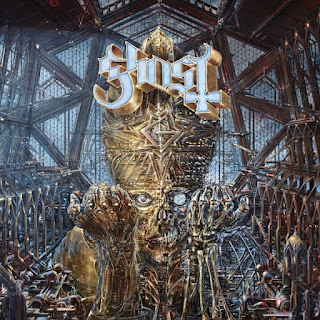
Frontman Tobias Forge (or I guess, as Ghost fans will understand, Papa Emeritus IV) enunciates vowels in such a way on this track that reminds me a great deal of Metallica, and the song is Metallica-esque not only for that reason but also because of its lumbering, heavy guitar riff a bit reminiscent of past Ghost tracks like "Cirice" and "Majesty." I love its guitar riff so much in fact that I think that it steals the spotlight away from Tobias (although I love how Forge sort of deeply whispers the "call me" part of the title at the very beginning of the chorus). Loudwire also called attention to the riff in its review of the song: "[It] counters the bombast of 'Hunter's Moon' with a reliable mid-paced hook riff that opens the track and carries forward..." It has been stated that IMPERA will overall address the unavoidable fall of empires, but it also seems to be heavily influenced by iconic occultist Aleister Crowley. The IMPERA album cover (featured above since there doesn't seem to be an official single cover for "Call Me Little Sunshine") is a direct homage to a photograph of Crowley, and the "Call Me Little Sunshine" song title is also a reference to a Crowley quote; when asked why he was so fascinated with the mark of the beast, Crowley replied, "[It] only means sunlight. You can call me Little Sunshine." Like "Cirice," I see the song as being about empathy and reaching out to people in pain, people who (like Lucifer) are outcasts and feel alone: "You will never walk alone. You can always reach me. You will never ever walk alone." It's a beautiful song, and I cannot wait to hear what IMPERA as a whole has to offer!

Thursday, January 6, 2022

Ghost - Hunter's Moon - Single [Review]

Swedish metal band Ghost finally released an original song following 2019's single Seven Inches of Satanic Panic (which featured the two songs "Kiss the Go-Goat" and "Mary on a Cross") a few months ago, pumping fans up for the band's upcoming fifth album on the horizon (although a release date has yet to be revealed). The song, titled "Hunter's Moon," was released to promote the Halloween Kills film so is most likely a standalone single that will not be on the album, but even if that does end up being the case, that's not to say that it won't be a bonus track on a deluxe edition or a Target exclusive edition or something like that. "Hunter's Moon" was definitely a grower for me. I wasn't immediately hooked and found it to be an average Ghost song upon my first (and maybe second) listen, but it quickly grew on me and even became one of my favorite songs of their catalogue thus far. It's so melodically and sonically powerful and has an '80s hair metal vibe to it, a vibe which reminds me a bit of Prequelle (especially songs like "See the Light" and "Dance Macabre"). I especially love the oscillating guitar which quite honestly steals the show, even away from frontman Tobias Forge (masquerading as Papa Emeritus IV)'s vocals, and another one of my favorite parts is Forge's guttural chanting of "Hunt! Hunt! Hunt!" Forge confirmed in an interview that the song was not written specifically for Halloween Kills but that he instantly thought of it when he was asked to write a song for the movie, and the lyrics definitely do work pretty perfectly for the movie. Tobias also stated in that aforementioned interview that the title refers to the hunter's moon seen in October (which is, of course, around Halloween), and the song seems to take the word hunt in multiple directions - a festive one, a somewhat sweet and romantic one, and even a sinister one. There are so many characters whom one could imagine the song's lyrics being from, including Laurie Strode, the town mobsters who are fanatically trying to hunt down and kill Michael Myers, and of course Michael Myers himself. Given that, as previously stated, the song is actually from Forge's unused back catalogue, I do definitely wonder how old that it actually is (especially given that there is also an alternate version of the song that plays in the end credits of the movie that is a very different version and sounds like it might even be an earlier recorded demo), but regardless, I cannot wait for a new Ghost album hopefully dropping this year!

Tuesday, July 21, 2020

Ghost - Prequelle [Review]

Prequelle is Swedish metal band Ghost's fourth studio album following Meliora (2015), Infestissumam (2013), and Opus Eponymous (2010). Released in 2018, Prequelle is, in my humble opinion, the band's best work, although Meliora is a close second. I love Prequelle because of how theatrical that it is, sounding almost like an epic rock opera, especially given that it's somewhat of a concept album chronicling the Black Plague. Before delving into discussing the music on the album in more detail, however, I do believe it to be necessary to touch upon the Ghost lore. In reality, the frontman of Ghost is Tobias Forge (previous member of bands such as Repugnant, Subvision and Magna Carta Cartel), but Ghost is a band that has a fictional lore attached to it, and within the lore, each album has a different frontman. The Seven Inches of Satanic Panic single (which was really released in 2019 but in 1969 according to Ghost lore) was fronted by Papa Nihil, the three Papas' father. Opus Eponymous was fronted by Papa Emeritus I. Infestissumam was fronted by Papa Emeritus II. Meliora was fronted by Papa Emeritus III. Prequelle marks the first album not fronted by a Papa. The band is instead fronted by Cardinal Copia (often affectionately referred to by fans as Cardi C). The band released a web-series on its YouTube channel that began with Papa Nihil and Sister Imperator appointing Cardinal Copia as the new leader of the band. It's a very funny series, with Nihil initially protesting against Cardi C's appointment because he wants to keep the role within his bloodline: "My father was Papa," Nihil protests, "his father, his father's father, his father's father's father, his father's father's father's father's father, his father." Sister retorts that Nihil is all out of progeny and that Cardinal Copia is the "next senior most member." Nihil eventually agrees to appoint Cardinal Copia as the new Ghost frontman, but as of now, he has only ever been referred to as Cardinal Copia, not Papa Emeritus IV. With that being said, however, I remember watching an interview with Tobias Forge in which the interviewer asked him if Cardinal Copia would be the frontman of Ghost's fifth album, and Forge said, "No, he's done after this record." When the interviewer then asked him if it would be someone new, Forge said, "I just know that he will not bear the name Cardinal Copia." That leads me to believe that Cardi C will be christened Papa Emeritus IV. A popular fan theory is that Cardi C is in fact Nihil's and Sister Imperator's son, so perhaps that revelation will lead to his becoming Papa IV.

Moving on to discussing the music on Prequelle, the album opens with "Ashes," which works not only as an opening to the album but also an opening to "Rats," especially since the eerie melody played on piano in "Ashes" is then repeated on guitar near the end of "Rats." "Ashes" features Forge's daughter reciting a variation of the "Ring Around the Rosie" children's rhyme (fitting because the children's rhyme is in fact about the Black Plague): "Ring a ring o' roses, a pocket full of posies. Atishoo, atishoo, we all fall down. Ashes on the water, ashes in the sea. Ashes on the riverside, one, two, three." Just about every time that I listen to this track, the heavy guitar suddenly coming in at 0:48 in and breaking the rhyme always startles me even though I know that it's coming because the track is so quiet up to that point. The sing-songy chanting is unsettling, reminding me a bit of the rhyme in the A Nightmare on Elm Street films. "Ashes" moves seamlessly into "Rats," in some ways the true opening to Prequelle since, as I said, "Ashes" is really just the intro to it. "Rats" is such a great album opener because of its energy. (It even opened the album's corresponding tour.) It's not only a heavy headbanger but also has somewhat of a danceable groove to it. It's very anthemic, especially with Cardi's infectious "Ah whoah" in the chorus. It's also pretty cool how Prequelle came out two years ago, yet some of its themes are even more fitting now in 2020. As anyone reading this knows, 2020 has not been a pleasant year. A deadly virus referred to as COVID-19 surfaced in late 2019 and became a pandemic in March of 2020. Since then, over 560,000 people worldwide (over 137,000 of those being Americans) have died from it, and it initially started with panic and hysteria as people stocked up on disinfectant wipes, hand sanitizer, and toilet paper. (I can't really explain the toilet paper. Like I said, it was hysteria.) False and misleading information was spread around the internet, further heightening the mass panic since most people see Facebook headlines and don't bother to read the articles and fact-check them. Americans are now required to wear masks in public and are also required to maintain a distance of at least six feet from each other. Those are definitely reasonable parameters since, as I said, the death rate is rather high and continues to climb. The opening lyrics of "Rats," however, definitely speak to the current situation pretty accurately: "In times of turmoil, in times like these, belief's contagious, spreading disease." The song, as I said, is about the Black Plague (hence its vilifying of rats since they were one of the primary carriers of the disease), but it can be used as a metaphor for anything negatively infectious - disease, hatred, propaganda, etc.

"Faith" is one of the heaviest songs on Prequelle, with bludgeoning heavy guitar persisting throughout the entirety of the track. One aspect of Prequelle that I really love is that even though it does tackle some of the same issues that prior albums do - religious corruption, Satanism (although to a much lesser degree on this album), death, and so forth - I also firmly believe that it does so in a clever way so that it also takes on some more personal issues relevant to Forge, and "Faith" is a good example of this. The opening verse of "Faith" features Cardi C rhythmically singing the following: "There is a scourge in the guise of sanctity, a perpetrator with a quill, although it's often steeped in well-spun mystery, the accuser sends the bill, yeah!" Genius quotes one of the band's nameless ghouls as having said (of religious fanaticism and power-hungry Christian authorities), "Obviously, it is a big problem. It's a very contemporary problem. It's a very, very big danger..." Genius also points out the possibility, however, that this song is targeted at former Ghost bandmates who, back in 2015, came forth with a lawsuit against Tobias Forge, and I wholeheartedly agree. I don't really know all of the details of the lawsuit - just that the band members felt that they were not being compensated fairly for Ghost's profits and that Forge ended up winning the lawsuit. The fact that Forge won strongly suggests to me that the band members who sued him likely knew what the arrangement was, agreed to it, but then tried to pull a fast one. If so, then Forge likely felt betrayed, and I think that there are a couple of songs on this album that reflect that anger and betrayal, "Faith" definitely being one of them. I find it incredibly likely that that opening verse, for example, is targeting the former bandmates, especially considering the "accuser sends the bill" line, which is literally exactly what they did. In keeping with the themes of religious fanaticism, however, the chorus of the song declares that "I am all eyes. I am all ears. I am the wall, and I'm watching you fall because faith is mine!" This is very likely meant to be ironic, as in speaking from the perspective of a corrupt religious leader saying that faith is all that they need to be all powerful and omnipresent. In keeping with the Black Plague theme, this could also be from the perspective of Death, declaring that he is everywhere and cannot be avoided. That is, as I stated previously, one of the many aspects that I love about Ghost's music but especially about this album - the fact that the lyrics can be interpreted in so many different ways, and those different ways aren't necessarily mutually exclusive. Is Forge talking about his personal struggles with former bandmates? Is he talking about religious fanatics? Is this another chapter of the album's Black Plague narrative? The answer is very likely yes to all.

I love the relentless weight of "Faith," but Prequelle definitely has some softer numbers to offer, as well, as is typical of Ghost albums. At the end of "Faith," there is a soft organ interlude playing a melody that we will again hear at the end of the album (but I will discuss that when I get to discussing that particular song), and that interlude moves seamlessly into "See the Light." Although there is a slamming guitar riff in the chorus of "See the Light," the song is ultimately a softer power ballad compared to "Faith." This is rather ironic, in fact, because it is lyrically another angry and bitter track even though Cardi C sings it - especially on the verses - in a somewhat softer tone. The song also features a light tribal beat with accompanying piano, all adding to its softer ballad (albeit, as I said, power ballad) atmosphere. Cardi C lyrically calls back to "Rats" in the opening verse: "Many a rat I've befriended..." He also once again touches upon betrayal on this track: "...but of all the demons I've known, none could compare to you... but of all these dark roads that I roam, none could compare to you." The chorus of the song is especially bitter and angry, however, as Cardi C, in a more aggressive tone than on the verses, declares that "every day that you feed me with hate, I grow stronger. Drink me; eat me. Then, you'll see the light." The "drink me; eat me" line could very well be a reference to the Catholic communion ritual, which Ghost has touched upon in the past on songs such as "Body and Blood," but telling someone to "eat me" is also a common way of telling someone who has insulted you or wronged you off. I absolutely believe this song to be another targeted at former Ghost bandmates, which Tobias Forge himself more or less confirmed. When asked in an interview if "See the Light" was about the bad blood with former bandmates, Forge replied, "Yes! I think it's a song that can apply to any situation in which you're surrounded by enemies. Really, it's a song about redistributing anger and negativity." I really love this aspect of the song because even though it is a bitter and angry song, it's ultimately about using that anger in a positive way. Cardi C declares that "every day that you feed me with hate, I grow stronger," which indicates a refusal to allow hatred to wear you down but rather revitalize you. This is true of much of Ghost's music in general. There is a bite to it, and it often takes on some negative and dark topics, but there is usually hope - a light at the end of the tunnel. Forge even said in an interview (to which I linked in this review earlier) that much of Ghost's music is about salvation, and I agree wholeheartedly.

"Miasma" (which is a very unpleasant odor) is the fifth track on Prequelle and is one of most unusual tracks that Ghost has done up to this point in their career. It's purely instrumental with no lyrics but runs at over five minutes in length, making it a lengthier instrumental track sort of like "Genesis" from Opus Eponymous. That isn't what makes it unusual, however; it stands out amongst Ghost's catalogue because of its unique sound. It is undoubtedly a hard rock song but also features elements of jazz with its heavy use of the saxophone. (Interestingly, within the Ghost lore, it is Papa Nihil - who fronted the band back in 1969 when the band originally released its Seven Inches of Satanic Panic single - playing the saxophone here. In fact, Papa Nihil ended up passing away from a heart attack while playing the saxophone part on stage, but again, this is fictional and is part of the Ghost mythology.) It begins with what sounds like low synth before the band breaks in, and the song has a retro ambience to it that I can't quite explain. Something about it takes me back to the '90s when I was a little kid playing Sonic the Hedgehog on my SEGA Genesis. That definitely changes once the saxophone kicks in, but most of the track washes in a wave of nostalgia. The last part of the song - the jazzy part - can be heard near the beginning of the "Dance Macabre" music video, which is the next song featured on Prequelle. "Dance Macabre" is perhaps one of the poppiest and catchiest songs that Ghost has done to date. The song sounds like a pop rock / hard rock song pulled from the '80s and features an infectious (pun intended) chorus. I especially love the fluttering piano heard throughout the verses, and I also really love the electric guitar that breaks back in right before the pre-chorus when Cardi C asks, "How could it end like this?" Probably not unintentionally on Tobias Forge's part, the song's lyrics remind me a great deal of Edgar Allan Poe's classic short story "The Masque of the Red Death." In that short story, a fictional plague is spreading which kills people within a short amount of time, causing them to bleed profusely from orifices and even pores before they die (hence it being called the Red Death). A prince sequesters himself and select people away in his castle, believing that he is safe from the plague. Upon hosting a masquerade party one night, a clock chimes once every hour, seeming to put everyone in a trance (which I believe is because it is serving as a reminder that their time is running out). Eventually, the Red Death takes on a visible form and enters the castle, killing everyone, proving that Prospero's wealth could not save him from death.

Poe's fictional plague was likely inspired by a combination of tuberculosis (to which he lost a lot of loved ones) and the Black Plague (which Prequelle is ultimately about). The phrase dance macabre means dance of death, and Prospero's masquerade attendants are indeed literally dancing when death claims them, and Cardi C references a clock chiming near the beginning of the song: "You'll soon be hearing the chime close to midnight." As I said, it is my belief that in "The Masque of the Red Death," the reason why the dancers seem to be spellbound when the clock chimes is that the clock instills fear in them. It serves as a reminder that with every second that passes, they are closer to death, and that is unfortunately true of all of us - plague or no plague. The song's lyrics are somewhat romantic, as they seem to be about two lovers dancing together and trying to enjoy their last night together before death takes them: "Just wanna be, wanna bewitch you in the moonlight. Just wanna be, I wanna bewitch you all night." I had actually thought for a long time that Cardinal Copia was saying "be with you," but I think that it is meant to sound like it could be either/or. "Pro Memoria" begins with very dramatic and high-pitched strings which are eventually broken by piano. This one is definitely a power ballad and features a beautiful melody, and I love the little bit of organ heard in the song. (The organ is one of my favorite instruments.) Genius interestingly claims that the song is not a rock track, and I wholeheartedly disagree. While perhaps not a heavy metal song and definitely, as I said, one of Prequelle's power ballads, it is absolutely a rock song. Cardi C, in the catchy and commanding chorus, urges us, "Don't you forget about dying. Don't you forget about your friend death. Don't you forget that you will die." This is obviously in keeping with the album's Black Plague theme, and it seems rather depressing. However, as discussed previously, there is definitely an element of hope and salvation in much of Ghost's music, and I personally think of this as more of a positive song. The fact that we are all eventually going to die is ultimately neither negative nor positive; it's merely fact, and occasionally reminding ourselves of said fact hopefully means that we make the best of the time that we have. I also love the fact that, as Genius observes, the song is most likely taking another dig at former bandmates who sued Forge. "Had you had the chance today, you could've sold out too. Ain't that right, Swede Saint Peter?" Saint Peter was also known as Simon, and Swede is likely meant to sound like both Swede and sweet, Swede being in reference to former band member Simon Söderberg, who, like Tobias, is Swedish.

"Witch Image" is a bit heavier than "Pro Memoria," but it's also another track that, in my opinion, has a positive message buried underneath a macabre and seemingly negative one. Like many of the album's tracks, it is very catchy, and even though I haven't seen any make the complaint, I am sure that there are some Ghost fans who have not appreciated the band's catchy hooks on this album, believing them to have "sold out," although I assure you that I am not such a fan, as, as I have said, Prequelle is my favorite Ghost album thus far. One reason that I say that, however, is not just because of the album's catchy songs (melodic and catchy hooks, after all, are hardly new for Ghost) but also because Tobias worked with several mainstream pop music songwriters on Prequelle, including Vargas & Lagola, Jesse St. John, and Sarah Hudson, on songs such as "Dance Macabre" and "Pro Memoria." "Witch Image" is a blend of heavy metal and arena rock (reminding me a bit, in fact, of "Square Hammer"). It sounds like another one that could have come from an '80s hair metal band, and in the earworm of a chorus, Cardinal Copia reminds the listener that "while you sleep in earthly delight, someone's flesh is rotting tonight." Is this dark and disturbing imagery? It absolutely is, and it is obviously part of the album's Black Plague narrative as are most of the album's tracks, but there is also a positive note to such lyrics. Like Meliora's "Cirice," it is my sincerest belief that the song's lyrics are encouraging empathy, encouraging the listener to understand that just because they might be comfortable doesn't mean that that is how the whole world feels; we shouldn't view the world through the narrow lens of our own perspective and no one else's. This once again calls back to Poe's "The Masque of the Red Death." Prospero does not have any empathy for the people outside who are suffering and dying from the Red Death; all that he cares about is himself and those whom he invited into the castle with him, which were likely socialites with money and influence. In the end, however, his royalty and his power did not save him; death doesn't care about our social status: "While you sleep in earthly delight," Cardi C sings near the end of the song, "still, your soul will suffer this plight." This of course means that you might be living in privileged comfort now, but that doesn't mean that you're safe from death. Something that all of us - every single one of us - have in common is that we cannot escape death. Like I said, in the end, death does not care about anything other than the fact that we are human and thus mortal.

"Helvetesfönster" is my favorite song on Prequelle and definitely in my top five favorite Ghost tracks in general. Like "Miasma," it is another longer instrumental track, and it is absolutely epic and magnificent, one of the most sonically impressive tracks that Ghost has done to date. A musical masterpiece written solely by Tobias Forge, the track is enough to convince me that Forge is a postmodern Mozart. The song title is Swedish for hell window which makes it an appropriate segue into the album's final track, but I will discuss that once I get to discussing that song. "Helvetesfönster" has a Medieval atmosphere to it (appropriate given that, as I keep saying, the album is meant to be a concept album about the Black Plague) which, I think, is one of the reasons that I love it. I tend to really like Celtic and New Age music, and "Helvetesfönster" reminds me a great deal of such genres which is very likely because such genres are also heavily influenced by Medieval music. The track also blends more modern sounding ingredients into the mix, however, as it also features electric guitar and drums. Everything from flute, piano, drums, heavy guitar, acoustic guitar, what I think might be harp, and even, near the end of the track, church bells can be heard. My favorite part of the song is the oscillating arpeggio played on piano near the beginning of the song (especially as it rises in intensity and hits a cathartic high point at just under two minutes into the track when heavy guitar comes into the fold) which reminds me of television themes such as Fringe, Stranger Things, and The Walking Dead. I also love the calming and peaceful last couple of minutes of the song. (Someone even made a video on YouTube which features that last part of the track for over an hour.) "Helvetesfönster" ends with church bells (which, given the theme of the album, are possibly meant to be a death knell) which move gaplessly into "Life Eternal," officially Prequelle's final song. "Life Eternal" is a gorgeous rock ballad, and here we are reminded of the organ melody heard at the end of "Faith." "Life Eternal" might work as somewhat of a sequel to "Dance Macabre" because I think that the song is from the perspective of someone whose lover (and possibly they themselves as well) is dying from the plague: "Can you hear me say your name forever? Can you see me longing for you forever? Would you let me touch your soul forever?" As previously mentioned, helvetesfönster meaning hell window is important because here, Cardi C sings, "I know the light grows darker down below," which is possibly a reference to hell, making the ninth track a transition into this final track.

"Life Eternal" is such a great closing track for Prequelle. It lyrically feels like a closing to the album's narrative, as, as I said, the lovers referenced in "Dance Macabre" have reached their end in one way or another. I find it unclear whether both of them are dying or if only of them is. As I said, the speaker of "Life Eternal" seems to be addressing their lover, but some of the lyrics, such as the ones that I quoted above, seem to suggest that only the other one is dying, not necessarily the speaker. It is also, as I said, a sequel of sorts to "Dance Macabre," as it even alludes to it: "We dance once more; I feel your hands are cold." The song is so melodically haunting and beautiful, and as I have said before, the organ is one of my favorite instruments, so I love that it is featured relatively prominently here on this track. As I said, "Life Eternal" closes Prequelle officially speaking, but the deluxe edition of the album does include two bonus tracks - both covers (which is typical of Ghost; they always include at least one cover song as (a) bonus track(s)). The first is "It's a Sin," a cover of a Pet Shop Boys song from 1987. Ghost's version is heavy on the church organ (yes!) and on the electric guitar, making it darker and heavier than the original Pet Shop Boys version, but as is usually the case of Ghost covers, it is very faithful to the original. It is definitely a fitting song for Ghost to cover because it is a critique of Christianity deeming just about everything as sinful. (Ghost frequently critiques Christianity in their lyrics.) We then get "Avalanche," a cover of a Leonard Cohen song from 1971. If I am being honest, this is potentially my least favorite Ghost cover primarily because I think that Forge tries too hard to sound like Cohen, and it doesn't really work because Cohen had such a unique voice. I wish that Tobias had just sang it more naturally. Other than that, however, it's pretty different from the original version. The original is very folksy and fueled primarily by acoustic guitar, whereas Ghost incorporates atmospheric strings, a steady drumbeat, and, of course, electric guitar. Like I said, Prequelle is my favorite Ghost album thus far, followed very closely by Meliora. It is so theatrical and reads to me like an epic rock opera. It also possibly fits into the theory that all of Ghost's albums tell an overarching story, with Opus Eponymous chronicling the impending arrival of the Antichrist and ending with his birth, Infestissumam dealing with the birth and presence of the Antichrist, and Meliora narrating his rise to power. If Prequelle fits into that narrative, then the apocalyptic nature of its lyrics could be the apocalypse brought on by the Antichrist. Regardless, however, I can't praise this album enough. If the next Ghost album tops this one, then it's going to be something that makes me rethink what music is. (Check out my reviews of other Ghost works here!)

Sunday, June 28, 2020

Ghost - Popestar EP [Review]

Ghost's Popestar EP is intended to be a companion piece to the Swedish heavy metal band's third studio album, Meliora (which I reviewed here). In fact, as I discussed in my review of Meliora, Meliora was also reissued with the songs that are present here on Popestar. The band did the same thing with its second studio album, Infestissumam (reviewed here), releasing a reissue of the album with songs that were also featured on the If You Have Ghost EP (reviewed here). As was also the case with If You Have Ghost, most of the songs featured here on Popestar are covers, with the only exception, in fact, being the opening track, "Square Hammer." "Square Hammer" has been critically acclaimed and has been considered by some to be Ghost's opus magnum. Loudwire even named the song the metal song of the decade (2010s, that is), and Tobias Forge has cited the song as one of Ghost's biggest milestones. While I do absolutely love the song (it might even be in my top 5), I definitely wouldn't consider it Ghost's best work. Ghost frontman Tobias Forge explained in an interview with Loudwire that the song was originally written as a show opener, which I think makes a lot of sense because it's definitely more of an arena rock song than it is a metal song. Forge felt that they didn't have a strong opener. "We need[ed] a big opening song," he reflected in the aforementioned interview. "We [didn't] have that." Interestingly, however, as he also discussed in that interview, "Square Hammer" made for a really good opening song for the Popestar Tour (after which this EP is named - a clever name since it is a play on the word popstar and the Papas are usually dressed like popes) but ended up becoming their signature closing song. (I believe that subsequent tours opened with the Prequelle opening track - "Rats.") Forge also mentions in that interview that the song was born from its opening riff which is how many Ghost songs are born. (The entire Ghost project, in fact, was born out of the "Stand by Him" riff that Forge came up with while in another band.) As I said, "Square Hammer" is an energetic arena rock song with an oscillating and infectious guitar riff, and the melody of the chorus is equally infectious. The song is, lyrically, one of Ghost's more difficult songs to decipher (in my opinion), but it seems to be flipping the popular "I swear to God" adage to express that you are telling the truth to make it Satanic, and as discussed in previous reviews of Ghost albums and EPs, subverting Christian passages and adages is typical of Ghost: "Are you ready to swear right here, right now, before the devil?" The song also makes use of masonic themes (hence the title including the word hammer even though the word is never said in the lyrics). As explained on Genius, the lyrics referencing being on the square or being on the level are phrases that come from masonry. "Square Hammer" also features a fun(ny) music video that pays homage to very old films such as Nosferatu (probably my favorite horror film of all time) and Metropolis.

Popestar then gives listeners "Nocturnal Me," a cover that made me really happy when I first discovered it because it is one of my favorite songs from the 1980s. Originally by Echo & the Bunnymen and released in the spring of 1984, I have to admit that I have Stranger Things to thank for being familiar with the original song, and it has always been one of my favorite songs presented on the series. The original version is a new wave song fueled by synth, strings, acoustic guitar, and a pulsating beat, and I definitely find it to lyrically be a fitting song for Ghost to cover for a couple of reasons. (1) There is sexual innuendo in the lyrics when, in the song's chorus, the speaker asks the subject to "take me internally," and Ghost is certainly no stranger to including sexual innuendo in its lyrics. Take these lyrics from the Infestissumam track "Jigolo Har Megiddo" as an example: "...I am the one who comes richly endowed, harvesting crops of fields that others have plowed." Forge even usually closes shows by asking the crowd to promise him that when they get home, they will give their significant others and/or themselves orgasms. In addition to that, the song is thematically somewhat similar to Depeche Mode's song "Waiting for the Night," which Ghost covered on the If You Have Ghost EP. I personally see both songs as being about loving the nighttime. "Waiting for the Night" talks about nighttime being a time for peace, quiet, and reflection, and "Nocturnal Me" is about considering yourself to be a nocturnal being and wanting to share your love of the night and your darkness with someone else. (The song "The Music of the Night" from The Phantom of the Opera is also thematically similar, as I am sure that many other songs are.) As is typical of Ghost (with few exceptions, such as their cover of "If You Have Ghosts"), Ghost stays pretty faithful to the original Echo & the Bunnymen version. This version is melodically unchanged, although it is, of course, heavier, relying much more on heavy guitar. We then get "I Believe," originally by Simian Mobile Disco. This is a very interesting choice for Ghost to cover for two reasons: (1) the original version is a totally different genre - electronic music and (2) even Ghost's version is very different than their usual sound, as it's very dreamy and ethereal and not really hard rock or heavy metal at all. The original is heavily synthy, sounding like a retro synthpop song from the '80s, whereas Ghost's version is, as I said, light and dreamy. It is lyrically ultimately a love song, heralding someone as being what the speaker needs to believe in love again, although who the subject is and what they are helping the speaker believe is left somewhat vague, meaning that Ghost could be intending the cover to be repurposed for a Satanic theme here on Popestar.

Popestar then provides listeners with "Missionary Man," a cover of a Eurythmics song from 1986. Both the original version and the Ghost cover have a bit of a southern rock flavor to them. I have to say that I overall prefer the Eurythmics version because something about Annie Lennox's soulful delivery brings more power to the song. Ghost does nothing to change the melody, and as is usual (as I mentioned previously), it is very faithful to the original. There is even a voice chanting in the background of the track which sounds very similar to Annie Lennox's chanting in the original song, and Ghost's version also keeps the harmonica part that is prevalent in the original. The lyrics of the song, which warn the listener not to "mess with a missionary man," are meant to be cynical and sarcastic, for as Lennox herself stated, "...I... think that there are a great deal of people in the media, in the form of politicians or religious speakers or philosophical people, people who are generally trying to have some power over other people, who I just don't trust." This makes a lot of sense given the title of the song, as a missionary is someone who travels and tries to recruit people to Christianity. It also therefore makes sense as to why Ghost would want to cover it. Their music frequently looks at Christianity with a critical eye, something that Tobias Forge has also frequently discussed in interviews, so covering a song about religious fanatics being despots definitely seems like an appropriate move. What seems like an odd move, however, is the band's decision to cover Imperiet's 1988 song "Bible." Imperiet, like Ghost, is a Swedish band, so that isn't surprising at all because Ghost also covered songs from fellow Swedish acts on If You Have Ghost. However, the song, on the surface, seems to simply be a recap of the creation of the world in seven days according to how the Christian Bible chronicles it; the lyrics even touch upon the creation of Adam and Eve. While Ghost is certainly no stranger to using religious imagery in its lyrics, it's usually in a more subverted and critical way. However, at the same time, the chorus of the song potentially offers a more complicated interpretation. "Now, who will pray for Babylon?" the melodically powerful chorus asks. "Sing a song to Babylon on your knees before Babylon. Beat that drum because Babylon is falling." As explained on Genius, Jerusalem is biblically considered to be the holy city, whereas Babylon is considered to be the city of sin. This part of the song could therefore be emphasizing the need for empathy and understanding, asking why we don't offer our hearts to those who most need it. The original is an '80s rock ballad through and through, and Ghost's version is sonically almost identical. I love its grand, anthemic sound, and it is definitely a highlight on this EP. I think that I overall prefer If You Have Ghost, but Popestar is a lot of fun, too, with "Square Hammer" definitely being its most exciting number.

Friday, June 19, 2020

Ghost - Meliora [Review]

Meliora (Latin for better which is possibly meant to follow up on the band's previous album title Infestissumam - which I reviewed here - as that essentially means worst) is Swedish metal band Ghost's 2015 third studio album, and what an album! As I have progressed through discussing and reviewing Ghost's discography (having started with their Seven Inches of Satanic Panic single - which I reviewed here - since that only felt fitting because it was my first exposure to them), I have been teasing that I would eventually reveal which Ghost album of the four thus far is my favorite - as I said that neither Opus Eponymous (reviewed here) nor Infestissumam was my favorite, and seeing as how I only have two albums left to review, I have to reveal that now because I will either way. If I say that Meliora isn't my favorite, then by process of elimination, then that means that Prequelle is, which it honestly is; however, Meliora is a very close contender. The two albums are, in fact, nearly tied, and Prequelle comes out on top by a hair. In my opinion, this is the first album on which Ghost proved what they are truly capable of doing. The amount of unique creativity and dramatic theatricality that went into the creation of this album is astounding (Meliora even won a Grammy, for which it was well deserving), and it only gets even better on Prequelle. (If the pattern continues on the band's fifth album, then it will be an earth-shattering album that changes what we thought we understood about rock and metal music.) Meliora is fictitiously (although not in reality, as the band's frontman is actually Tobias Forge) the first and only album to be fronted by Papa Emeritus III, as each Ghost album, as I have discussed in prior Ghost album reviews, is fronted by a new Papa. (Prequelle is the first time that that sort of changes, but that is a discussion for that review when I get to it.) The album opens with "Spirit," making Meliora the first (and thus far only) Ghost album to open with a full-length song rather than a short introduction. Ghost so often makes religious references in their music - specifically references from the Christian Bible - so that is likely what you would expect from a song titled "Spirit." Interestingly, however, the song is not about the religious or metaphysical kind of spirit but rather the alcoholic kind - absinthe to be precise. "Spirit" opens with an eerie warbling (that sounds like theremin) and a light, subdued choir, and this is one of the songs that initially reminded me of the band HIM. That is eventually broken by a marching beat and persistently thumping electric guitar, but my favorite aspect of the song is definitely the recurring choir that is heard in the chorus. It is, as I said, a song worshipping the liberating power of absinthe, even calling it a green muse.

"From the Pinnacle to the Pit" has a memorable groove to it (as do a lot of Ghost songs), beginning on lightly strumming electric guitar and occasional light percussion. It is arguably one of the heaviest songs on Meliora, however, once it picks up (although definitely not the heaviest). Featuring a fun and theatrical music video drawing inspiration from old silent films (as does the band's music video for its single "Square Hammer"), the song takes on an empathetic view of Satan and his status as a fallen angel; the song title, after all, refers to coming from a high point (the pinnacle) to a low point (the pit): "You are cast out from the heavens to the ground," Papa Emeritus III (who might just be my favorite of the three Papas, as he is probably the most stylish and contemporary) sings in the catchy chorus, "blackened feathers falling down. You will wear your independence like a crown." This is quite clearly referring to how Lucifer used his exile from heaven as an opportunity to rule over his own kingdom, but what I love about this song (and many of Ghost's songs for that matter) is the fact that it definitely does not have to be taken that literally because some of us (myself included) likely know what it's like to be exiled from a place, to be outcasted and ostracized, and a song like this can really help a listener who has felt or is feeling that way look at it from a positive point of view. "Cirice" (an Old English word meaning church) is not only my favorite song on Meliora but one of my favorite Ghost songs period. The song, without a doubt, showcases some of the most impressive and earth-shattering guitar playing that I have ever heard from a hard rock or heavy metal act and is - hands down in my opinion - the heaviest track on the album, with that aforementioned guitar riff slamming and stomping aggressively, begging to be headbanged to. As is true of many Ghost songs, there is a grinding groove and raging rhythm to it. I also love "Cirice" not only for its sound and anthemic melody, however, but also because of its lyrics. Genius explains that the song is about warmly accepting a new initiate into a Satanic cult or church, but I interpret it more as being about having empathy for the listener in general. As the tempestuous guitar riff takes a reprieve in the chorus, Papa gently encourages the listener, "I can feel the thunder that's breaking in your heart. I can see through the scars inside you." I like to think of this song as Ghost addressing their fans, empathizing with us and assuring us that their music is there for us. "Cirice" also features a memorable music video which definitely echoes the song's theme of empathy, and it features a scene that is definitely inspired by Stephen King's Carrie.

"Spöksonat" (Swedish for ghost sonata) is a hauntingly beautiful instrumental interlude running at just under a minute, and it works well as an outro to "Cirice" because its lulling melody - which is played on a harp - is somewhat similar to the opening of "Cirice" - the somewhat eerie and foreboding guitar strumming. "He Is" is next on Meliora, and this is definitely taking things down a few notches (especially following "Cirice"), as the song is a bit of a power ballad. It, in fact, feels both sonically and thematically a bit out of place on the album in my opinion, but that is probably because, as a band member has explained, "He Is" wasn't originally intended for Meliora. It was intended for Infestissumam, but the band felt like it just didn't fit on the album, and it didn't make the cut. They were apparently attempting to amplify the song and make it more theatrical but eventually realized that the song was always meant to be a simpler song as it is presented here on Meliora. It begins with dreamily strumming acoustic guitar with Papa's somewhat echoey vocals singing the first verse, "We're standing here by the abyss, and the world is in flames. Two star-crossed lovers reaching out to the beast with many names." The sing-songy and catchy chorus praises Satan: "He is, He's the shining and the light without whom I cannot see, and He is insurrection; He is spite; He's the force that made me be." In my review of Infestissumam, I promised that in my review of Meliora, I would discuss in more detail about how the band often uses Satanic lyrics and imagery more so to mock Christianity and organized religion than to actually praise the literal figure that is Satan, and the reason why I planned to discuss that in this particular review is the "He Is" music video. In the hazily filtered video (which looks and feels like a parody of something), Papa Emeritus III is seen leading a service inside a church, a service featuring a choir singing along to the song's chorus, people in the pews singing along, and Papa making his way around the crowd accepting monetary donations on a collection plate and offering people the symbolic body and blood of Christ (which I discussed in my Infestissumam review regarding the song "Body and Blood"). Papa doing so in a stylish white suit and sunglasses looks utterly ridiculous, especially alongside a song about Satan, but that is the point. As does the aforementioned song "Body and Blood," the music video is definitely calling attention to the ludicrousness of Catholic rituals (including baptisms, which is also seen later in the video), while also possibly suggesting that, as do some Satanists (or at least what it means to be a Satanist in the eyes of uninformed people), Catholic people also have their own form of bizarre rituals.

Meliora takes an interesting turn when it goes from the light sounding "He Is" to the considerably heavier "Mummy Dust." (This, however, isn't all that unusual for rock and metal bands; take Evanescence's album Fallen, for example, going from "My Immortal" to "Haunted" and then later from "Hello" to "My Last Breath.") In fact, when the band performs "Mummy Dust" live, Tobias Forge often refers to it as one of their heaviest songs, and while I agree, I don't think that it's heavier than "Cirice." (As I mentioned when I discussed "Cirice," I really believe that to be the heaviest song on Meliora.) "Mummy Dust" begins with a slamming electric guitar riff, and I will admit that the weight of the song is much more relentless than it is on "Cirice," but I still find the oscillating guitar on "Cirice" to be heavier. My favorite part of "Mummy Dust" is the eerie piano trills that punctuate Papa's vocals in the chorus. It is lyrically one of Ghost's more coded songs, and as I said in my review of Infestissumam, there is definitely more than one way to be a Ghost fan. Because so many of their songs are riddled with obscure cultural and religious references, you can either listen to it and take it as it, simply allowing yourself to feel what you feel (which I think is a totally valid and legitimate way of listening), or you can dig into researching the potential meanings of the songs' lyrics. (The third option, of course, is that you don't need to do either because you are already aware of what all of the references mean.) I fall into the second category, as I usually find that I am able to appreciate music more if I understand obscure references. I usually use Genius for such endeavors, and Genius interprets "Mummy Dust" as a song about greed and materialism, supported, for example, by the third verse: "You're the possessée of avarice. I'm the ruler of the earth. I will smother you in riches 'till you choke on sordid mirth." Avarice is, of course, a word that means greed, and this seems to me be referring to people who won't ever be satisfied by wealth because no matter how much money that they have, they will always want more. I love the verses of the song because they are so poetic and have a rhythm to them; Papa's half singing and half speaking is even punctuated by the percussion and guitar riff. In the chorus of the song, Papa also sings, "In God, you trust...," and I don't believe this to literally be talking about God. I believe it to be a reference to the phrase In God We Trust being printed on American money. It is definitely a highlight on the album, but that isn't necessarily saying a whole lot because the whole album, really, is gold.

I like "Majesty," but it's probably my least favorite song on Meliora. (As I said, however, I really love this whole album, so that really isn't saying much, and it definitely isn't saying that I don't like the song.) I just don't find it as interesting or as ambitious as most of the other tracks. As I have discussed in previous reviews of Ghost albums, there are fans who believe Ghost's albums thus far to be somewhat similar to Marilyn Manson's second (Antichrist Superstar), third (Mechanical Animals), and fourth (Holy Wood) albums in that they are a series all telling the same story. With Manson's albums, they were released in reverse chronological order, telling the story of the rise of the Antichrist as he eventually ushered in the apocalypse. The belief with Ghost's albums is quite similar (except not in reverse chronological order). Opus Eponymous is believed to narrate the conception of the Antichrist (evidenced by tracks such as "Prime Mover" and "Genesis"), Infestissumam to narrate the birth of the Antichrist (evidenced by tracks such as "Year Zero"), and Meliora to narrate the rise of the Antichrist (evidenced by tracks such as "He Is" and "Majesty"). (I will discuss the role of the fourth album, Prequelle, as it fits into this theory when I review that album.) As I said, "Majesty" supports this theory because it seems to be about followers bowing down to a leader. The song opens with a bluesy rhythm that reminds me a great deal of blues rock bands from the 1970s but eventually brings in a more modern sounding and amplified heavy riff. "Devil Church" then works as a rather short (running at just over a minute in length) interlude between "Majesty" and "Absolution," and I really love the melody of the track, which opens on a church organ and eventually breaks out into full band, working as an excellent introduction to "Absolution." I really like "Absolution," but my only problem with it is where it is placed on the album. For some reason that I can't fully explain, I don't really like it being placed so close to the end of the album because it sonically sounds like an opener; it has an introductory energy to it. I really like the piano in the chorus, and it lyrically works as a sort of sister song to "Mummy Dust," as Tobias Forge himself has explained that the song is about material greed: "Lyrically speaking, it is a lament of the modern woman or man who spend their lives thinking that their possessions have that something else that allows them to be above any responsibility." The lyrics of "Absolution" definitely speak to this idea: "Even now, when you're here, you are moving," Papa sings in the second verse, "hysterically seeking out what needs improving, and you're still asking for the sun." At the end of the day, it doesn't matter what we have or don't have because we are all simply human and cannot take our possessions with us when it is our time to go.

Meliora closes with my second favorite song (next to "Cirice") on the album, "Deus in Absentia" (Latin for in the absence of God).  The song begins with the sound of a clock ticking, eventually broken by Papa's low vocals curtly punctuated by percussion. It is not a heavy song, sounding almost, in fact, like an '80s power ballad, and has a beautiful melody in the chorus practically begging to worm its way into your ear. That catchy melody is, in fact, probably the main reason why this song is my second favorite song on the album. I also love how theatrical that it is, such as when it sonically dies down and brings in a choir. (The outro, in fact, features a choir eerily chanting the song's title in a style similar to a requiem.) I think that there are a number of ways to interpret the song's meaning from a lyrical standpoint. Coming from Tobias himself: "...This song talks about a modern and ambitious person, just at the time of his death or possibly at one of those crossroads of life in which you feel or think you are seeing or reaching the end..." The song title also suggests the possibility that the speaker of the song feels alone in the world, that without a god, there is no purpose to life. I also firmly believe in the possibility that this song (either coincidentally or intentionally) works as a segue into Ghost's fourth album Prequelle, which deals with a lot of apocalyptic themes. The catchy and somewhat poppy chorus of "Deus in Absentia" reads (or is heard) as follows: "The world is on fire, and you are here to stay and burn with me. Our funeral pyre, and we are here to revel forevermore (more)." The term funeral pyre supports Forge's outlook on the song - that it is about someone at the end of their life, but is it possible that they are dying because of a catastrophic or apocalyptic event that has proven to them that there is no God? The world is on fire strongly suggests that to me, and as I just stated and will discuss at further length in my upcoming review of the album, Prequelle is somewhat of a concept album dealing with an apocalyptic event. As stated previously, "Deus in Absentia" does officially close Meliora, but there are various bonus tracks released on different editions of the album. A limited vinyl features the rare track "Zenith," an upbeat hard rock track driven by piano and organ. (I wish that the song - which Genius argues is ultimately about science and knowledge proving Christianity to be a farce - had a wider release because it is so, so good.) Similar to Infestissumam, Meliora was also reissued with four cover songs as well as a new original song titled "Square Hammer," but those five tracks were also released separately as an EP cleverly titled Popestar, so, once again, instead of reviewing those tracks here, I am going to do so in a separate review of that EP. Look out for that!

Tuesday, June 9, 2020

Ghost - If You Have Ghost EP [Review]

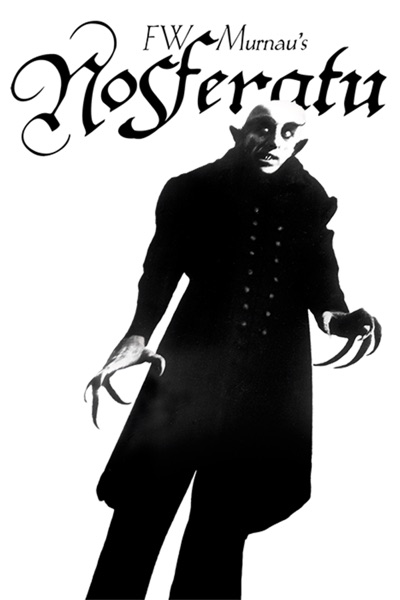
Before I begin discussing the music that is present on this EP, indulge me as I take a minute to fanboy over the cover art. This is not the first time that a classic horror film has inspired Ghost's cover art, as the cover art of the band's debut album Opus Eponymous (which I reviewed here) pays homage to the Salem's Lot (1979) movie poster. I especially love the cover art of If You Have Ghost, however, because it pays homage to what is probably my favorite horror film of all time - the 1922 silent German Expressionist horror film Nosferatu: A Symphony of Horror. The cover art, as featured above, features Papa Emeritus II with Count Orlok (the film's antagonist)'s fiendishly long fingers wearing the same robe that Count Orlok wears throughout the film, and the image as a whole is inspired not only by this movie poster but also by a specific scene in the film in which Orlok stands on the deck of a raft. Even the back cover of the physical copy of the EP pays homage to an iconic scene from the film - when Orlok's shadow is seen creeping upstairs. As someone who, as I said, absolutely loves Nosferatu, I am just so thrilled by this, but let's move on to discussing the music on the EP, shall we? As discussed in my review of the band's second studio album Infestissumam, Ghost released a reissue of Infestissumam titled Infestissumam Redux that featured six bonus tracks, and five of those bonus track were collected separately here on this EP - four covers and a live version of "Secular Haze." The EP is cleverly titled because it is a play on the song "If You Have Ghosts" by Roky Erickson, which is the first song covered on the EP. As a fan of Ghost, my opinion on these covers is likely biased, but I do prefer most of these covers to their original versions, and that includes "If You Have Ghosts." The original version (released in 1981) and Ghost's version are like night and day. Erickson's is an upbeat and fast-paced psychedelic pop-rock track including a part approximately halfway through in which he basically rapidly spits out the lyrics in a speaking voice rather than singing them, whereas Ghost's version is a much more intimate and melodic take on the song, beginning with low and booming strings. Even when guitar comes into the fold, it's rather delicate, making this more of an alternative song than a metal song. "If you have ghosts, you have everything," the beautiful chorus preaches, and there are numerous ways to interpret that because the word ghosts means different things to different people. It could be saying that if you have loved ones who have died, then you have everything because that grief is evidence that you experienced love in your life. Ghosts could also be being used as a synonym for skeletons in your closet or inner demons, meaning that if you have baggage or trauma, then you have everything because such things are reminders that you are human.

If You Have Ghost then gives us "I'm a Marionette," a cover of an ABBA song, an iconic pop and disco group from Sweden (from where Ghost frontman Tobias Forge also hails). Ghost covering ABBA sounds like such a strange concept, but it works so very well, and this track might even in fact be the brightest highlight on this EP. The original ABBA version is a moody pop song influenced by disco and progressive rock about, as the title would suggest, feeling like you're living in a simulation in which you, at the end of the day, have little to no free will because of being unable to fight or change destiny. This could very easily be applied to mundane activities such as doing house chores, working a 9 to 5, and so forth, although it also could be applied to the demands placed on musicians: "I'm a marionette, everybody's pet, just as long as I sing." Ghost's version does not change the melody at all but is, of course, considerably heavier and potentially, with its inclusion of organ layered underneath, darker. I love the catchy hook of the song and, even though it's a cover, I remember it being amongst the first Ghost tracks to catch my attention when I listened to their whole discography. "Crucified," like "If You Have Ghosts," is one that takes the original version and dials it down a few notches. The original 1991 version is by Army of Lovers (also a fellow Swedish group) and is an upbeat dance track clearly heavily inspired by the disco movement of the '70s, coming right out of the early '90s rave movement capitalized by artists like Ace of Base and Madonna. Ghost's version, on the other hand, is not as energetic and is a bit slower but is also, as would likely be expected, heavier. Papa eerily half sings and half whispers the verses, gloriously rolling his Rs, and it's really such a great cover. It's probably my second favorite track on the EP next to "I'm a Marionette." It is lyrically about feeling persecuted and unjustly discriminated against, using references from the Christian Bible to emphasize the point. Although I can't say for sure, Ghost likely chose the song not only because Army of Lovers, as previously mentioned, is a fellow Swedish group (as is ABBA) but also potentially because of the Biblical references which Ghost also tends to use (although when Ghost does it, it's usually done in a more mocking and satirical way such as changing and reversing terms and phrases). It is also entirely possible that its lyrics are intended to be a commentary on how the group has been criticized over the years by religious fanatics for being a Satanic band.

We then get a cover of a song from one of my favorite bands - Depeche Mode. Ghost lifts a song from Depeche Mode's 1990 album Violator (my favorite album of theirs), "Waiting for the Night." Depeche Mode's version is a slow synth-pop song (which honestly describes most of Depeche Mode's music) essentially about being in love with the cover of darkness that nighttime offers: "I'm waiting for the night to fall," Dave Gahan and songwriter Martin L. Gore sing in velvety voices on the chorus of the original song. "I know that it will save us all. When everything's dark, keeps us from the stark reality. I'm waiting for the night to fall when everything is bearable, and there in the still, all that you feel is tranquility." This is one (and potentially the only) example of an instance on this EP when I might prefer the original version to Ghost's cover version, but I am also, as I said, a big fan of the Violator album. It seems to be a popular album amongst hard rock and heavy metal acts, as other acts have covered songs from it, as well. Marilyn Manson covered "Personal Jesus" on his 2004 greatest hits compilation Lest We Forget: The Best of Marilyn Manson, and Lacuna Coil covered "Enjoy the Silence" (as did HIM live) on their 2006 album Karmacode, just as a couple of examples. Ghost's cover of "Waiting for the Night" does not deviate too far from the original, although Papa sings the melody in a somewhat higher register than Gahan and Gore do on the original version, and it is, of course, more of a hard rock song than a synth-pop song, bringing in guitar that is absent from Depeche Mode's version. There are also traces of what sounds like organ, which seems to be a favorite instrument of the band since they tend to use it a lot (which never bothers me because it is also one of my favorite instruments). As I stated before, the EP then closes with a live version of "Secular Haze," the studio version of which is found on the band's second studio album Infestissumam. This is the only song on the EP that is not a cover, and it was recorded live at the Music Hall of Williamsburg in New York City (Brooklyn to be more precise). It really isn't any different from the studio version on Infestissumam (other than the fact that it is, of course, a live recording), and I already discussed the studio version of the song in my review of Infestissumam, so that pretty much brings my discussion and review of the If You Have Ghost EP to a close. Next on my agenda is to discuss and review Ghost's third studio album, Meliora, which I absolutely adore, so I am really looking forward to that. Be on the lookout for that!